tow guide trailer life

Tow Guide: Trailer Life ‒ A Comprehensive Plan

This comprehensive guide delves into the critical aspects of trailer towing, focusing on weight distribution and stability for a comfortable and safe journey․
Understanding where the weight is located within your trailer is just as important as the total weight itself, impacting both design and practical towing setup․
Towing a trailer opens up a world of possibilities, from recreational adventures to hauling essential equipment; However, successful and safe trailer towing requires more than simply hitching up and driving․ It demands a thorough understanding of the principles governing trailer dynamics, weight distribution, and vehicle compatibility․ Many newcomers assume that staying within specified weight ratings is sufficient, but this overlooks a crucial element: where that weight is positioned․
The location of weight significantly impacts trailer stability and handling․ A properly loaded trailer, with its weight strategically distributed, will track straight and true, providing a predictable and comfortable towing experience․ Conversely, an improperly loaded trailer can exhibit unsettling behaviors like sway, fish-tailing, and instability, potentially leading to dangerous situations․ This guide will explore the intricacies of trailer weight, focusing on how to achieve optimal balance for a secure and enjoyable towing journey․ We will cover axle positioning, tongue weight, and loading techniques to ensure your trailer tows safely and predictably․

Understanding Trailer Weight Basics
At its core, trailer weight isn’t just a single number; it’s a complex interplay of total mass and its distribution․ While the overall weight capacity is vital, understanding how that weight is allocated across the trailer’s length is paramount for stable towing․ It’s a common misconception to believe that as long as you’re below the specified weight ratings, everything will be fine․ However, the location of the weight dramatically influences handling and safety․
Weight distribution directly affects tongue weight – the downward force exerted on the hitch by the trailer’s tongue․ This force is a critical factor in maintaining control․ Too much weight forward results in excessive hitch stress, while too much weight rearward leads to instability and dangerous sway․ Achieving the correct balance isn’t merely about meeting limits; it’s about optimizing the trailer’s behavior on the road․ Proper axle positioning during design, or careful loading during setup, are key to a comfortable, predictable, and safe towing experience․
Gross Vehicle Weight Rating (GVWR) Explained
The Gross Vehicle Weight Rating (GVWR) represents the maximum permissible weight of a fully loaded trailer, as specified by the manufacturer․ This isn’t simply the trailer’s empty weight; it encompasses everything – the trailer itself, cargo, fluids, and the tongue weight exerted on the tow vehicle․ Exceeding the GVWR is a serious safety hazard, potentially leading to component failure, reduced braking effectiveness, and loss of control․

Understanding GVWR is the first step in responsible trailer towing․ It’s crucial to consult the trailer’s data plate to determine its specific GVWR․ However, GVWR is only one piece of the puzzle․ Equally important is ensuring the tow vehicle’s capacity is sufficient to handle the loaded trailer weight․ The GVWR dictates the upper limit, but proper weight distribution, as discussed, is essential to staying within that limit safely and maintaining stability․ Ignoring GVWR or failing to account for all loaded weight can have severe consequences on the road․
Tongue Weight: The Key to Stability
Tongue weight is the amount of force exerted downward on the hitch ball by the trailer’s tongue․ It’s a critical factor in trailer stability, acting as a lever arm to prevent sway and maintain control․ Insufficient tongue weight can lead to dangerous trailer oscillations, while excessive tongue weight can overload the tow vehicle’s hitch and rear suspension․

Ideally, tongue weight should be approximately 10-15% of the total trailer weight․ This range provides a balance between stability and manageable hitch loading․ The axle position significantly influences tongue weight; moving the axle forward increases tongue weight, while moving it backward decreases it․ Designers carefully consider axle placement to achieve appropriate tongue weight during trailer construction; Proper loading is also paramount – concentrating weight towards the front of the trailer increases tongue weight, enhancing stability․ Remember, tongue weight isn’t just about preventing sway; it’s about ensuring predictable and safe towing behavior․
Calculating Optimal Tongue Weight
Determining the optimal tongue weight is crucial for safe towing․ Begin by finding your trailer’s Gross Vehicle Weight Rating (GVWR) – the maximum permissible weight of the loaded trailer․ Multiply the GVWR by 0․10 (10%) and 0․15 (15%) to establish the acceptable tongue weight range; For example, a trailer with a GVWR of 5,000 lbs should have a tongue weight between 500 and 750 lbs․
However, this is a starting point․ Actual tongue weight can vary based on cargo distribution․ Use a tongue weight scale to measure the actual weight exerted on the hitch․ Adjust cargo placement to fall within the calculated range․ If the tongue weight is too low, shift weight forward․ If it’s too high, move weight rearward․ Remember that exceeding the tow vehicle’s hitch capacity or the trailer frame’s limits can be dangerous․ Prioritize staying within both the trailer’s and the vehicle’s specified weight limits for a stable and controlled towing experience․
Weight Distribution and Its Importance
Weight distribution within a trailer profoundly impacts towing stability and control․ It’s not simply about the total weight, but where that weight is located relative to the trailer’s axles and hitch․ Proper distribution ensures appropriate tongue weight, which is vital for maintaining a stable connection with the tow vehicle․

Ideally, approximately 60% of the trailer’s weight should be concentrated forward of the axle(s)․ This forward bias contributes to positive tongue weight, preventing trailer sway and “fish-tailing․” Conversely, excessive weight towards the rear creates instability․ Careful loading is paramount; heavier items should be positioned lower and closer to the axle(s) and the front of the trailer․ Even distribution side-to-side is also important․ Ignoring weight distribution can lead to a compromised towing experience, increasing the risk of accidents and making the journey uncomfortable and unpredictable․
The Impact of Forward Weight Placement
Concentrating weight towards the front of a trailer significantly increases tongue weight – the downward force exerted on the hitch of the tow vehicle․ While a certain amount of tongue weight is desirable for stability (typically 10-15% of the total trailer weight), too much forward weight can create its own set of problems․
Excessive tongue weight places considerable stress on the tow vehicle’s hitch receiver and the trailer’s tongue itself․ This can potentially exceed the weight capacity of either component, leading to structural damage or failure․ Furthermore, it can negatively affect the tow vehicle’s handling, causing the rear suspension to compress and reducing steering responsiveness․ However, if both the tow vehicle and trailer frame are robust enough to handle the increased load, a higher tongue weight isn’t necessarily detrimental․ The key is ensuring all weight ratings are respected and the system remains within safe operating parameters․
Consequences of Rearward Weight Placement
Conversely, positioning too much weight at the rear of a trailer dramatically reduces tongue weight, leading to instability and potentially dangerous towing conditions․ This imbalance creates a lever effect, making the trailer susceptible to sway and “fish-tailing” – a side-to-side oscillation that can quickly escalate out of control․
When weight is biased towards the rear, the trailer becomes more sensitive to external forces like wind gusts, passing vehicles, and uneven road surfaces․ This diminished stability requires constant corrective steering from the driver, increasing fatigue and the risk of losing control․ Both the total trailer weight and its distribution play crucial roles in this instability․ A lighter trailer is generally more prone to sway, but even a heavier trailer can become unstable if the weight is improperly positioned․ Addressing this requires careful loading practices to ensure a balanced weight distribution and adequate tongue weight․
Axle Position and Weight Distribution
The placement of the axle(s) on a trailer is a fundamental design element directly influencing weight distribution and, consequently, towing stability․ During the design or build phase, the axle position is strategically determined to achieve an appropriate tongue weight – a critical factor in maintaining control while towing․
Manufacturers and builders carefully calculate axle placement, considering the intended load capacity and typical cargo distribution․ This ensures that, under normal loading conditions, the resulting tongue weight falls within the recommended range for safe towing․ However, it’s important to note that standard calculations for axle position and tongue weight often don’t account for the distribution of weight itself, focusing primarily on the total weight․ Therefore, understanding how cargo placement affects the overall balance is crucial for trailer owners․ Adjusting cargo to optimize weight distribution, even with a correctly positioned axle, is essential for a stable and predictable towing experience․
Trailer Sway and Instability: Causes and Prevention

Trailer sway and instability are serious concerns for anyone towing, often described as unsettling movements like “fish-tailing․” These issues frequently arise when the weight within the trailer is positioned too far towards the rear, creating an imbalance that makes the trailer susceptible to external forces like wind or uneven road surfaces․
Both the total trailer weight and its distribution significantly contribute to instability․ While proper axle positioning helps establish a baseline stability, improper loading can easily negate those benefits․ To prevent sway, prioritize loading heavier items over the axle(s) and towards the front of the trailer․ Avoid concentrating weight at the rear․ Maintaining appropriate tongue weight – typically 10-15% of the total trailer weight – is paramount․ Consider using weight distribution hitches for heavier trailers to redistribute weight and enhance stability․ Regularly inspect tires for proper inflation and ensure all connections are secure before each trip․
Loading Techniques for Stable Towing
Achieving a stable towing experience hinges on meticulous loading techniques․ The goal is to distribute weight strategically to maintain optimal tongue weight and minimize sway․ Begin by placing the heaviest items as close to the trailer axle(s) as possible, and ideally, centered over them․ This centralizes the weight, reducing the tendency for instability․

Prioritize loading heavier objects slightly forward of the axle(s) to increase tongue weight, but avoid exceeding the hitch’s weight capacity․ Distribute weight evenly side-to-side to prevent leaning․ Avoid concentrating a large amount of weight at the very rear of the trailer, as this is a primary cause of sway․ Secure all cargo thoroughly to prevent shifting during transit, as movement can dramatically alter weight distribution․ Regularly check load security during your trip, especially after hitting bumps․ Remember, a well-loaded trailer is a safe trailer, contributing significantly to a comfortable and predictable towing experience․
Common Loading Mistakes to Avoid
Several common loading errors can compromise trailer stability and safety․ A frequent mistake is loading too much weight at the rear of the trailer, inducing sway and a “fishtailing” effect – a dangerous instability․ Conversely, overloading the tongue can strain the tow vehicle’s hitch and potentially damage the trailer frame․
Failing to distribute weight evenly side-to-side creates imbalance, leading to leaning and unpredictable handling․ Another critical error is inadequate cargo securement; shifting loads dramatically alter weight distribution mid-trip, causing instability․ Overlooking weight ratings – both for the trailer and the tow vehicle – is a serious oversight․ Don’t assume that because you’re under the total weight limit, everything is fine; weight location matters immensely․ Finally, neglecting to consider the combined weight of cargo, passengers, and the vehicle itself can lead to exceeding the Gross Vehicle Weight Rating (GVWR), creating a hazardous situation․
Hitch Selection and Weight Capacity
Choosing the correct hitch is paramount for safe towing․ Hitches are rated by their maximum tongue weight capacity and gross trailer weight (GTW) capacity․ It’s crucial to select a hitch that exceeds both of these ratings for your fully loaded trailer․ Never operate with a hitch at its maximum capacity; a safety margin is essential․
Hitch classes range from Class 1 (light-duty) to Class 5 (heavy-duty), each designed for specific weight ranges․ Understand that the hitch rating isn’t the only limiting factor․ The tow vehicle’s towing capacity, as specified by the manufacturer, must also be considered․ Furthermore, the hitch receiver on your vehicle has its own weight limitations․ Ensure compatibility between the hitch, receiver, and the trailer’s weight․ High tongue weight, while contributing to stability, places significant stress on the hitch; verify the hitch’s capacity to handle this load․ Regularly inspect the hitch for any signs of wear, damage, or loosening․
Tow Vehicle Considerations: Matching Capacity to Trailer Weight
Selecting the right tow vehicle is as critical as choosing the correct hitch․ Your vehicle’s Gross Combined Weight Rating (GCWR) – the maximum permissible weight of the tow vehicle and trailer combined – is the primary consideration․ Exceeding the GCWR compromises safety and vehicle performance․
Don’t solely focus on the maximum trailer weight your vehicle can tow․ Factor in the weight of passengers, cargo, and any accessories added to the tow vehicle itself․ A heavier load in the tow vehicle reduces its available towing capacity․ Engine size, transmission type, and axle ratios also influence towing capability․ Vehicles with lower gear ratios generally perform better when towing․
Consider the vehicle’s braking system․ Ensure it’s adequate for stopping the combined weight of the vehicle and trailer․ Trailer brakes are often required for heavier trailers and are essential for safe downhill towing․ Always consult your vehicle’s owner’s manual for specific towing recommendations and limitations․
Maintaining Trailer Tires for Safe Towing
Trailer tires are often overlooked, yet they are a crucial safety component․ Unlike passenger vehicle tires, trailer tires typically experience less frequent use but endure harsher conditions, leading to accelerated wear․ Regularly inspect tires for proper inflation – crucial for handling and preventing blowouts․ Check the tire pressure before each trip, as it decreases naturally over time․
Look for signs of wear, such as uneven tread patterns, sidewall cracking, or bulges․ These indicate potential tire failure․ Trailer tires have a recommended lifespan, often regardless of tread depth, typically around five to six years․ Note the DOT date code on the sidewall to determine the tire’s manufacturing date․

Avoid overloading the trailer, as this significantly stresses the tires․ Consider using tire pressure monitoring systems (TPMS) for real-time monitoring of tire pressure and temperature while towing․ Proper tire maintenance dramatically reduces the risk of accidents and ensures a smoother, safer towing experience․
Regular Trailer Maintenance and Inspections
Proactive trailer maintenance is paramount for safe and reliable towing․ Beyond tires, a comprehensive inspection should occur before every trip and at least annually for more in-depth checks․ Begin with the hitch – examine the ball mount and locking mechanism for wear, cracks, or corrosion․ Ensure the safety chains are properly connected and not dragging on the ground․
Inspect all lights – brake lights, turn signals, and running lights – verifying they function correctly․ Check the wiring harness for damage and secure connections․ Lubricate the wheel bearings regularly, as they are critical for smooth rolling and prevent overheating․ Inspect the brakes for proper function and adjust as needed․
Don’t neglect the trailer frame; look for rust, cracks, or bending․ Securely fasten all cargo and ensure it’s evenly distributed․ A little preventative maintenance saves significant trouble and expense down the road, guaranteeing a safer and more enjoyable towing experience․
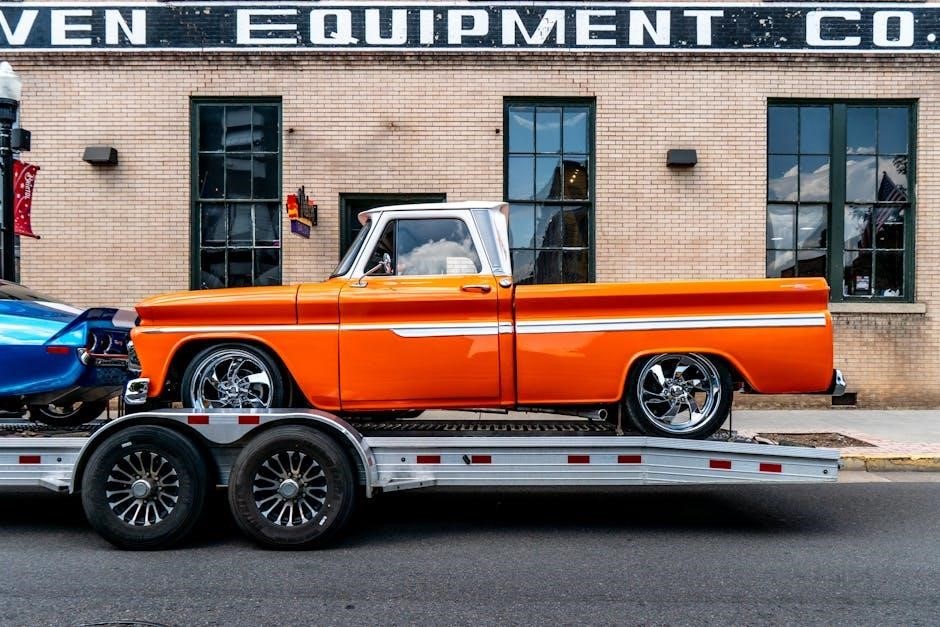
Don’t let towing stress you out! Our Tow Guide Trailer Life resource simplifies everything – from choosing the right gear to safe travel tips. Get ready for adventure!