trailer brake system fault see manual
Trailer Brake System Fault: A Comprehensive Guide
Navigating trailer brake system faults requires diligent investigation‚ often signaled by a “See Manual” warning‚ demanding a thorough understanding of potential issues and solutions.
Understanding the “See Manual” Warning
The “See Manual” warning‚ frequently encountered with trailer brake systems‚ isn’t a diagnosis itself‚ but a crucial indicator that the vehicle’s computer has detected an anomaly. This alert prompts owners to consult their vehicle’s owner’s manual for specific troubleshooting steps and error code interpretations. Often‚ this warning precedes or accompanies specific error codes like SH (short circuit) or OL (overload)‚ providing a starting point for investigation.
Ignoring this warning can lead to compromised braking performance‚ posing a significant safety risk. The manual will detail the system’s operation‚ potential fault locations‚ and recommended corrective actions. It’s essential to understand that the warning doesn’t pinpoint the exact problem; it signals the need for further diagnostic work‚ potentially involving visual inspections‚ wiring checks‚ and component testing.
Common Causes of Trailer Brake System Faults
Numerous factors can trigger these faults‚ including short circuits‚ overload conditions‚ damaged wiring‚ and corroded connectors‚ all impacting brake system functionality.
Short Circuit in Brake Wire (Error Code SH)
The error code SH‚ prominently displayed on controllers like the Tekonsha Prodigy‚ specifically indicates a short circuit detected within the brake wire during idle conditions. This means the brake controller is sensing an unintended electrical connection‚ typically to the trailer frame or another metallic component. The most frequent culprit is compromised wire insulation – cracking‚ wearing‚ or pinching can expose the copper wire‚ creating this short.
Careful inspection is crucial. Look for areas where the brake wire might be chafing against metal‚ or where the protective covering is damaged. A pinched wire‚ often occurring during trailer maneuvering or hitching‚ is a common cause. Addressing this issue involves identifying the compromised section of wire‚ repairing the insulation‚ or replacing the damaged wire segment entirely to restore proper functionality and eliminate the SH error code.
Overload Condition During Operation (Error Code OL)
The OL error code‚ as seen on brake controllers such as the Tekonsha Prodigy‚ signals an overload condition occurring while the trailer braking system is actively engaged. This doesn’t necessarily mean the trailer is physically overloaded with weight‚ but rather that the electrical circuit is experiencing an excessive current draw. This can happen if the trailer brakes are attempting to apply too much force‚ or if there’s a restriction in the electrical pathway.
Potential causes include malfunctioning brake components or issues within the trailer’s wiring. A seized brake caliper or a failing wheel cylinder could contribute to the overload. Thoroughly inspect the trailer’s braking system for any mechanical obstructions. Additionally‚ check for corroded or loose connections that might be increasing resistance and causing the controller to interpret the situation as an overload. Addressing these issues will resolve the OL error.
Damaged or Loose Wiring Harness
A frequently cited cause for trailer brake system faults‚ particularly the “See Manual” warning‚ is a compromised wiring harness. This encompasses both physical damage to the wires themselves and loose connections within the harness. Exposure to the elements‚ road debris‚ and constant flexing during towing can lead to cracked insulation‚ broken wires‚ or corroded terminals.
Ford Lightning Forum discussions highlight this as a common issue‚ emphasizing the need for a meticulous inspection of the entire harness length. Look for areas where the harness rubs against the vehicle or trailer frame. A pinched or chafed wire can cause intermittent shorts or open circuits‚ triggering the fault. Secure any loose wiring and repair or replace damaged sections promptly. Ensuring a secure and intact wiring harness is crucial for reliable brake system operation.
Corroded or Loose Connectors
Corrosion and loose connections within the trailer and vehicle connectors are significant contributors to trailer brake system faults‚ often manifesting as the “See Manual” warning. Exposure to moisture‚ road salt‚ and general environmental factors can lead to corrosion on the connector pins‚ hindering electrical conductivity. Ford Lightning Forum posts specifically mention this as a potential source of the problem.
Loose connectors can also interrupt the signal flow‚ causing intermittent faults. Regularly inspect both the 7-pin and 4-pin connectors for signs of corrosion or looseness. Clean corroded pins with a specialized electrical contact cleaner and ensure the connectors are securely fastened. A properly maintained connection is vital for consistent communication between the vehicle and trailer brake system‚ preventing false alarms and ensuring safe towing.

Troubleshooting Steps
Systematic diagnosis is key; begin with a visual inspection of wiring‚ checking for continuity‚ and meticulously examining the trailer connector for any issues.
Visual Inspection of Wiring
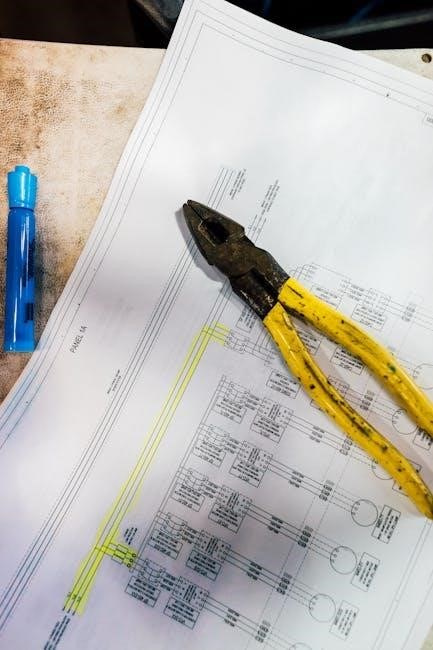
A comprehensive visual inspection of the trailer wiring is the crucial first step in diagnosing a brake system fault. Carefully examine the entire length of the brake wire‚ paying close attention to areas where it passes through metal frames or near moving parts. Look for any signs of damage‚ such as cracks‚ abrasions‚ or worn insulation. The error code SH often points to a short circuit caused by exposed wiring making contact with the trailer frame or another metal surface.
Inspect the wiring harness for any visible damage‚ including cuts‚ kinks‚ or loose connections. Damaged harnesses can lead to intermittent faults or complete system failures. Check for pinched wires‚ especially in areas where the harness bends or is secured. A pinched wire can cause a short circuit or break the connection. Ensure all connections are secure and free from corrosion. Remember‚ even a seemingly minor visual defect can be the root cause of a complex trailer brake system fault.
Checking for Pinched Wires
Pinched wires are a frequent culprit behind trailer brake system faults‚ particularly those triggering a “SH” error code indicating a short circuit. Systematically inspect the wiring harness along its entire route‚ focusing on areas where it bends‚ passes through metal components‚ or is secured with clamps or ties. Pay close attention to points where the wire is in close proximity to the trailer frame or other metal parts.
Gently flex and manipulate the wiring harness to identify any areas where the wire feels constricted or compressed. A pinched wire may not exhibit visible damage externally‚ but internal damage can still create a short. Use a multimeter to test for continuity while gently bending the wire; a fluctuating reading suggests a potential pinch. Addressing pinched wires promptly is crucial to prevent further damage and ensure reliable brake function. Thoroughly secure the wiring to prevent future occurrences.
Testing for Continuity in Brake Wire
Confirming the integrity of the brake wire through continuity testing is vital when diagnosing a “SH” (short circuit) error. Disconnect the brake wire from both the trailer connector and the vehicle’s wiring harness to isolate the circuit. Utilize a multimeter set to the continuity testing mode – typically indicated by a diode symbol or audible beep.
Connect one probe of the multimeter to one end of the brake wire and the other probe to the opposite end. A successful test will display a reading of near zero ohms or emit an audible tone‚ signifying a complete circuit. Any reading of infinite resistance or the absence of a tone indicates a break in the wire. If continuity is absent‚ visually inspect the wire for damage and repeat the test after addressing any identified issues.
Inspecting the Trailer Connector (7-Pin & 4-Pin)
A thorough inspection of both the vehicle’s and trailer’s connectors – whether 7-pin or 4-pin – is crucial for resolving trailer brake system faults. Begin by visually examining the connector for any signs of physical damage‚ such as bent pins‚ cracks‚ or corrosion. Pay close attention to the brake wire pin; ensure it’s not bent or broken.
Disconnect and reconnect the connector several times to verify a secure connection. Loose connections can intermittently disrupt the signal‚ triggering fault warnings. Check for corrosion within the connector; clean any corrosion with a specialized electrical contact cleaner. Remember‚ issues can occur regardless of whether using a 7-pin or 4-pin connector‚ as reported by users experiencing faults with both types.
Specific Scenarios & Observations
Faults manifest diversely: during towing‚ with multiple trailer connections (4-pin‚ 7-pin)‚ or intermittently‚ suggesting wiring or module inconsistencies requiring careful diagnosis.
Fault Occurring with Multiple Trailer Connections (7-Pin‚ 4-Pin)
Experiencing the trailer brake system fault across various connection types – both 7-pin and 4-pin connectors – strongly suggests the issue isn’t isolated to a specific trailer or connector. This points towards a problem within the tow vehicle’s brake controller or the trailer brake module itself‚ rather than a fault localized to the wiring of a single trailer.
As noted in Ford Tremor Forum discussions‚ the error can appear regardless of whether a fifth wheel (7-pin)‚ bumper connection (7-pin)‚ or even a simpler 4-pin setup is utilized. This widespread occurrence eliminates the possibility of a trailer-specific wiring issue. It’s crucial to investigate the vehicle’s internal systems‚ focusing on the brake controller and module‚ to pinpoint the root cause. A thorough inspection of the vehicle’s wiring harness‚ looking for damage or corrosion‚ is also essential in these scenarios.
Fault Appearing While Towing
The emergence of a trailer brake system fault specifically during towing operations indicates a problem triggered by the demands placed on the system under load. As highlighted in a Ranger6G forum post‚ the fault can manifest while actively towing a trailer‚ suggesting a connection between the braking action and the error message. This often signifies an issue with the electrical circuit’s ability to handle the increased current draw when the trailer brakes are engaged.
Potential causes include a short circuit developing due to wire flexing during turns‚ an overload condition within the brake controller‚ or a failing component struggling to maintain performance under stress. It’s vital to examine the wiring harness for any signs of damage or wear‚ and to verify the brake controller’s settings are appropriate for the trailer’s weight and braking capacity.
Intermittent Faults and Their Implications
Intermittent trailer brake system faults present a unique diagnostic challenge‚ as the error appears and disappears seemingly at random‚ making pinpointing the root cause difficult. These sporadic occurrences often suggest a loose connection‚ a partially damaged wire‚ or a component that is failing inconsistently. The fault may be triggered by vibrations during travel‚ temperature fluctuations‚ or specific maneuvers.
Such faults demand a meticulous inspection of the entire system‚ focusing on connectors and wiring harnesses. A visual check should be followed by testing for continuity and shorts‚ even if the fault isn’t currently present. Ignoring intermittent faults can lead to a complete system failure at an inopportune moment‚ potentially compromising safety while towing.
Relevant Error Codes & Their Meanings
Decoding error codes‚ such as SH (short circuit) and OL (overload)‚ is crucial for accurate diagnosis‚ providing vital clues to the underlying trailer brake system issue.

Decoding Error Code SH
The error code SH‚ displayed on controllers like the Tekonsha Prodigy‚ signifies a short circuit detected in the brake wire during idle conditions. This indicates that the brake wire is making unintended contact with the trailer frame or another metallic component. Consequently‚ the controller interprets this as a fault‚ triggering the warning message.
Common causes include pinched wires‚ cracked or worn insulation exposing the copper conductor‚ or damage resulting from improper wiring installation. A thorough visual inspection is paramount‚ focusing on areas where the wire might be compressed or chafed.
It’s important to note that this error doesn’t necessarily mean a complete wire break; rather‚ it’s an unintended electrical connection. Addressing the short circuit is vital to restore proper brake function and prevent potential damage to the brake controller or trailer wiring system. Careful tracing and repair of the affected wire segment are essential.
Decoding Error Code OL
The error code OL‚ as indicated by the Tekonsha Prodigy brake controller‚ signals an overload condition occurring during operation of the trailer braking system. This means the controller is detecting an excessive electrical draw from the trailer brakes‚ potentially indicating a problem within the braking mechanism itself or the wiring connected to it.
Possible causes include seized brake calipers‚ malfunctioning wheel cylinders‚ or excessively worn brake pads creating increased resistance. The overload can also stem from a short circuit within the trailer’s brake system‚ drawing more current than the controller can safely handle.
It’s crucial to investigate the trailer brakes themselves to identify the source of the overload. Ignoring this code can lead to further damage to the controller and potentially compromise braking performance. A professional inspection of the trailer’s brake components is highly recommended to diagnose and rectify the issue.

Potential Component Failures
Both the trailer brake module and the brake controller itself are susceptible to failure‚ triggering system faults and necessitating professional diagnosis and repair.
Trailer Brake Module Failure
A failing trailer brake module (TBM) can manifest as intermittent or consistent trailer brake system faults. The TBM is the central processing unit for the electric trailer brake system‚ receiving signals from the brake controller and distributing power to the trailer brakes. When the module malfunctions‚ it can disrupt this communication‚ leading to error codes like ‘SH’ or ‘OL’‚ or simply a complete loss of trailer braking functionality.

Symptoms of a failing TBM include the “See Manual” warning appearing frequently‚ even after addressing wiring issues. Diagnostic procedures often involve checking the module for proper voltage and ground‚ and verifying its ability to communicate with the brake controller. Replacement of the TBM is often required if internal component failure is confirmed. Ensure the replacement module is compatible with your vehicle and trailer brake system for optimal performance and safety.
Brake Controller Malfunction
The brake controller‚ installed within the tow vehicle‚ regulates the amount of voltage sent to the trailer brakes. A malfunctioning controller can trigger a trailer brake system fault‚ even if the trailer wiring and module are functioning correctly. Issues can range from a faulty control head to internal circuit failures‚ preventing proper brake signal transmission.

Symptoms include inconsistent brake application‚ the “See Manual” warning appearing alongside erratic controller behavior‚ or a complete lack of response from the trailer brakes. Troubleshooting involves verifying the controller’s power and ground connections‚ testing its output voltage‚ and checking for internal error codes (like those found on a Tekonsha Prodigy). If the controller is suspected‚ testing with a known-good unit is recommended to confirm the diagnosis before replacement.
Resources & Further Information
Vehicle owner’s manuals‚ Ford online forums (Bronco6G‚ Ranger6G‚ F150 Lightning Forum)‚ and etrailer.com provide valuable insights for diagnosing trailer brake faults.
Consulting the Vehicle Owner’s Manual
Your vehicle’s owner’s manual is the primary resource for understanding the trailer brake system and interpreting warning messages like “See Manual.” It contains specific information related to your truck’s towing capacity‚ brake controller settings‚ and diagnostic procedures. The manual will detail the location of relevant fuses and relays‚ as well as provide guidance on inspecting the wiring harness and connectors.
Pay close attention to the section outlining trailer brake system operation and troubleshooting. It may include diagrams illustrating the wiring configuration for both 7-pin and 4-pin connectors. Furthermore‚ the manual will likely list common error codes and their corresponding meanings‚ aiding in pinpointing the source of the fault. Don’t overlook the section on towing safety‚ which emphasizes the importance of regular brake inspections and maintenance. Referencing the manual first can save time and potentially prevent more serious issues.
Online Forums and Communities (Ford‚ Bronco‚ Ranger)
Ford‚ Bronco‚ and Ranger online forums are invaluable resources for owners experiencing trailer brake system faults‚ offering shared experiences and potential solutions. Platforms like Ranger6G‚ Bronco6G‚ and the F-150 Lightning Forum host discussions where users detail their troubleshooting steps and findings. Many have encountered the “See Manual” warning and documented their journeys to resolution‚ often involving wiring inspections‚ connector checks‚ or module diagnostics.
Searching these forums using keywords like “trailer brake fault‚” “error code SH‚” or “error code OL” can reveal relevant threads. Users frequently share insights regarding intermittent faults‚ issues with specific trailer connections (4-pin‚ 7-pin)‚ and potential component failures. Remember to verify information and exercise caution when implementing advice from online sources‚ but these communities can provide a wealth of practical knowledge and support.
Don’t panic! A trailer brake system fault can be scary, but we break down the manual & help you diagnose the issue. Get back on the road safely!